How a Mosquito can manage your project?
A simple six-part checklist for people who are new to project management
You have been asked to run a project. Perhaps it is a website, an office move or a new product launch. Nobody has handed you a manual, and the word “methodology” makes your eyes glaze over. Where do you start?
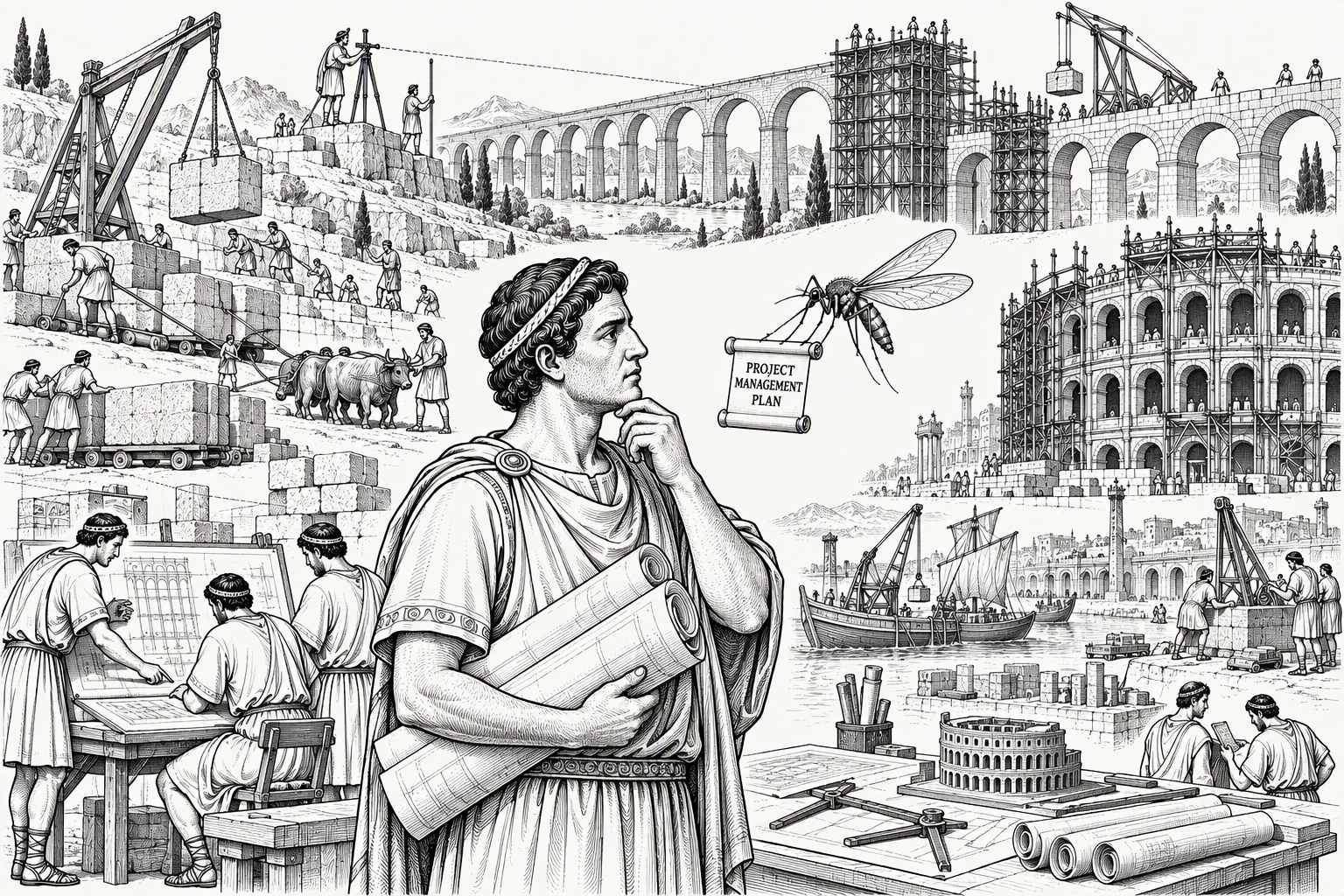
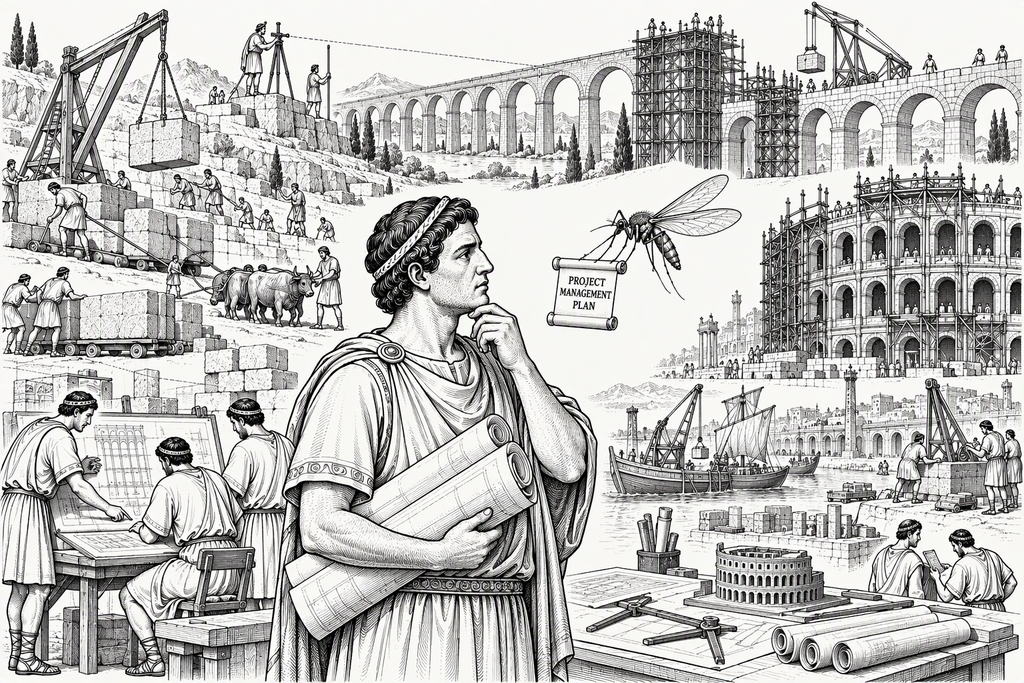
Start small. A mosquito is tiny, yet nobody ignores it. Project problems are the same: they are rarely dramatic at first, but if you let them be, they bite. That is why we use MoSQuITO, an easy way to remember the six areas every project has to keep an eye on.
The six areas at a glance
- Mo – Money: what the project may cost.
- S – Scope: what the project will deliver.
- Qu – Quality: how good the result has to be.
- I – Information and Communication: who needs to know what.
- T – Time: when things have to be ready.
- O – Organisation: who does what, and who decides.
These areas depend on each other. Change one and the others move. Adding features (scope) usually costs more money and takes more time. Cutting the budget often hurts quality. Managing a project is largely the art of balancing these six.
Mo – Money
Money is not only the total budget. It is knowing where the money goes and noticing early when it is going faster than planned. Many beginners forget the hidden costs: people’s time, licences, travel, training and the unexpected.
Common trap: giving one optimistic figure and hoping for the best.
First step: write down every cost you can think of, add a safety margin of 10 to 15 per cent, and check actual spending against the plan every week or two.
S – Scope
Scope is the list of what the project will deliver, and just as importantly, what it will not. Without it, every good idea becomes part of the project. This is called scope creep, and it is one of the most common reasons projects run late and over budget.
Common trap: “Can you just add…?”, repeated until the project is twice the size.
First step: write one page with two headings, “In” and “Out”. Get the people who asked for the project to agree to it. When a new request arrives, ask what it will cost in money and time, and let the owner decide.
Qu – Quality
Quality does not mean perfect. It means fit for purpose. A prototype for internal testing needs a different standard from a product sold to thousands of customers. The danger is that nobody agrees what “good enough” means until the work is finished, and then it is too late.
Common trap: assuming everyone shares the same picture of the result.
First step: agree up front how you will judge the result. Three to five clear, checkable statements are enough, for example “the page loads in under three seconds”.
I – Information and Communication
Most project trouble is, at heart, a communication problem. Someone did not know about a change, a decision was never passed on, or bad news reached the sponsor too late. Good communication does not mean more meetings. It means the right people getting the right information at the right moment.
Common trap: telling people only when things go well.
First step: list everyone involved or affected, note what each needs to know and how often, and keep one place where decisions and changes are written down. A short weekly update beats a long monthly report.
T – Time
Time covers the deadline and every step on the way to it. People tend to underestimate how long things take, especially when other people or other teams are involved. Delays also tend to arrive together, because one late task holds up the next.
Common trap: only looking at the final date.
First step: break the work into steps, estimate each one, and set a few milestones: moments where you can check whether you are on track. Work backwards from the deadline, and add some breathing space.
O – Organisation
Organisation is about people and responsibilities. A project with ten people, each assuming someone else is in charge, is a project that stands still. Everyone should know their role, who they report to, and who makes the final call.
Common trap: shared responsibility, which often means nobody’s responsibility.
First step: give every task one owner, name one person who makes decisions, and check that the people you need are really available, not only on paper.
Your MoSQuITO checklist
Print this table and keep it next to your plan. If you can answer all six questions, you already have a solid start.
| Area | The question to ask | Your first step |
|---|---|---|
| Mo – Money | What can we spend, and on what? | Write down a budget with a 10–15% safety margin |
| S – Scope | What exactly are we delivering, and what not? | List what is in, and what is out |
| Qu – Quality | How will we know it is good enough? | Agree the acceptance criteria up front |
| I – Information & Communication | Who needs to know what, and when? | Make a simple contact and reporting list |
| T – Time | What is due when? | Set milestones, then work backwards |
| O – Organisation | Who does what, and who decides? | Name one owner per task and one decision-maker |
Use it as a regular health check
MoSQuITO is not a one-off exercise. Run through the six areas at the start of the project, and again at every milestone. Ask: is any of them being neglected? Where has something changed? A quick ten-minute review, once a week, will often reveal a problem while it is still small and cheap to fix.
It will not replace formal training or a full method. It does give you a clear, memorable structure, and that is often all a first-time project manager needs to get going with confidence.
Keep the mosquito in mind: it is small, but it never goes unnoticed. Treat each of the six areas with the same attention, and your project will be far less likely to bite back.